A PSA nitrogen generator rarely stops working without warning. In most cases, the first signs are small. A nitrogen analyser that once showed 99.5% purity may slowly fall to 99.2%. The operator may adjust the cycle time to bring the purity back up, or the compressor may start running longer than it used to. These changes can continue for months before anyone connects them to a possible CMS problem.
One reason could be the gradual loss of carbon molecular sieve performance. But a purity drop does not automatically mean the CMS needs to be replaced. Leaking valves, poor compressed-air quality, moisture, pressure changes and a drifting analyser can all produce similar results.
For businesses using PSA nitrogen generators, Western Adsorbents & Catalysts supplies carbon molecular sieve for nitrogen generation applications and helps customers consider CMS requirements based on generator performance and operating conditions.
Short Answer: A carbon molecular sieve generally lasts about 5 to 8 years when the incoming air is clean, dry and free from oil. Under good operating conditions, some charges can remain in service for more than 10 years. If oil or moisture reaches the adsorption beds, or the generator goes through frequent pressure cycles, the service life can fall to 2 or 3 years. Replacement is normally required when the generator can no longer maintain its required purity and flow under normal settings after the filters, dryer, valves and analyser have been checked.
What the Sieve Does Inside Your Generator
The job of CMS is to separate nitrogen from oxygen in compressed air. It does this because oxygen and nitrogen interact differently with the very small pores in the sieve. Oxygen molecules are approximately 3.46 Å in diameter, while nitrogen molecules are around 3.64 Å. The pore structure allows the CMS to adsorb oxygen preferentially, while nitrogen passes through the bed as the product gas.
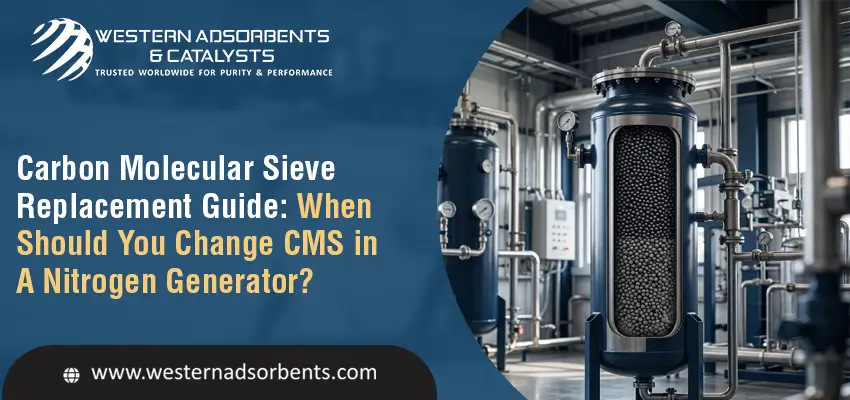
A PSA nitrogen generator uses two adsorption towers so that nitrogen production can continue while the CMS is being regenerated. One tower operates under pressure and adsorbs oxygen. The other is depressurised, allowing the gases held by the sieve to be released. After a set period, the two towers switch roles.
The condition of those tiny pores has a direct effect on generator performance. Contamination can interfere with adsorption, while physical damage to the pellets can create fines and affect gas flow through the bed. This is why keeping the compressed air clean and dry is so important for CMS service life.
How Long Does a Carbon Molecular Sieve Last?
There is no universal replacement interval for CMS. The condition of the incoming air, operating pressure, cycle frequency and general maintenance of the nitrogen generator all play a part.
| Operating Conditions | Typical CMS life |
| Well-filtered, dry air with stable pressure and limited start-stop operation | 8–10+ years |
| Normal industrial operation with regular filter and dryer maintenance | 5–8 years |
| Poor filtration, high humidity and frequent start-stop cycles | 2–3 years |
| Liquid oil or water entering the adsorption towers | Severe damage can occur within days |
This is why the installation date alone is not a reliable way to decide whether CMS needs replacing. Two generators installed at the same time can have very different sieve life if their operating conditions and maintenance histories are different.
Looking at nitrogen purity, production rate, compressor air consumption and pressure drop over time gives a much clearer picture.
Signs Your CMS Is Reaching the End of Its Life
1. Purity Drops at the Same Flow Rate
Suppose your generator consistently produced 99.5% nitrogen at a particular flow rate, but now struggles to stay above 99%. If the rest of the system is working correctly, the CMS may no longer be separating oxygen as effectively as it once did.
A slow decline usually points towards gradual ageing. A sudden change, especially after a maintenance or filtration problem, deserves a different investigation.
2. Output Falls While Purity Is Maintained
Sometimes the generator can still produce the required nitrogen purity, but only at a lower flow rate. You may find that the product valve has to be adjusted or the production rate reduced to keep purity within specification.
If this happens without a change in demand or operating conditions, the adsorption beds should be checked.
3. The Air-to-Nitrogen Ratio Keeps Increasing
Compressed-air consumption is another useful number to watch. If the generator gradually needs more air to produce the same amount of nitrogen, its overall efficiency may be declining.
A simple monthly record of compressor running hours, air consumption and nitrogen production can reveal this trend. It can also help determine whether replacing the CMS is likely to make a meaningful difference to operating costs.
4. Pressure Drop Increases and Black Dust Appears
CMS pellets can produce fines as they wear or are subjected to excessive mechanical movement. Those fines may collect around screens and other parts of the tower, restricting gas flow and increasing pressure drop.
Black dust around an exhaust or silencer is worth investigating, particularly in an older bed. It may indicate that the pellets are breaking down rather than simply losing adsorption capacity.
5. Oily Smell or Clumped Pellets
Oil contamination can cause a much more sudden performance problem. If nitrogen purity falls after a compressor issue, filter failure or blocked drain, the CMS should be inspected.
Pellets that have become sticky, clumped or coated with oil are a clear warning sign. Once significant oil contamination has occurred, the material may no longer provide the adsorption performance required by the generator.
Rule These Out Before Ordering New CMS
A nitrogen generator with low purity does not always have a CMS problem. Before replacing the sieve, check the other parts of the system that can cause similar symptoms.
➤ Oxygen analyser: A drifting or poorly calibrated analyser can give you the wrong purity reading.
➤ Switching valves: A valve that does not seal properly can allow unwanted air flow during the PSA cycle.
➤ Dryer and drains: Excess moisture can affect the adsorption bed. Check the pressure dew point and make sure automatic drains are functioning.
➤ Filter elements: Check their condition, differential pressure and service history.
➤ Nitrogen demand: Running the generator above its rated capacity can reduce purity even when the CMS itself is still usable.
These checks are worth doing before ordering a new charge. Replacing good CMS will not solve a valve, dryer or analyser problem.
Top-Up or Full Replacement?
CMS can settle slightly during operation. If this creates a small gap in the bed, adding a suitable quantity of the same material may sometimes be considered.
That is different from dealing with an old or contaminated bed. Mixing a small quantity of new CMS into badly worn material does not restore the entire bed to new condition. The difference in pellet age and performance can also affect how gas moves through the tower.
If the sieve is heavily contaminated, badly worn or producing a significant amount of fines, a complete change-out is usually the more sensible approach. Both towers should be loaded according to the generator manufacturer's requirements, using a suitable and compatible CMS grade.
How a CMS Change-Out Is Done
Safety first: Never treat an opened adsorption tower as an ordinary vessel. It can contain a nitrogen-rich atmosphere that does not provide enough oxygen for safe breathing. Fully isolate and depressurise the equipment, ventilate the area and follow the site's confined-space and maintenance procedures. Appropriate eye and respiratory protection should also be handling CMS use.
➤ Shut down and depressurise: Stop the generator, isolate the compressed-air supply and release all stored pressure. Confirm that the gauges have returned to zero and apply the required lockout procedures.
➤ Remove the old CMS: Remove the spent material using suitable vacuum equipment. If the CMS has been contaminated with oil, handle it according to the applicable waste-handling requirements.
➤ Inspect the tower: Check the screens, distributors, diffusers, pressing arrangement and other internal parts for damage or accumulated fines.
➤ Fix the original problem: Replace damaged filters, repair leaking valves and confirm that the dryer and drains are working correctly. There is little value in installing fresh CMS while the original cause of failure remains.
➤ Load the new CMS: Use the specified quantity and loading procedure. The material should be distributed evenly so that the finished bed is dense and uniform.
➤ Close and leak-test: Reinstall the internal components, secure the tower and check for leaks before returning the generator to service.
➤ Commission the generator: Start the system under controlled conditions and allow the product gas to vent until the required nitrogen purity is stable.
➤ Record the new baseline: Record purity, flow, cycle time, pressure drop and air consumption. These figures will give you something to compare against during future inspections.
Making the Next CMS Charge Last Longer
CMS life starts with the quality of the compressed air entering the generator. Keep the filtration system maintained, make sure the dryer is doing its job and check the automatic drains regularly. A properly maintained air-treatment system helps keep oil and moisture away from the adsorption beds.
An activated carbon filter may also be used where removal of oil vapour is required as part of the compressed-air treatment system. Avoid unnecessary start-stop operation and do not consistently run the nitrogen generator beyond its rated capacity. Where demand changes significantly, suitable nitrogen storage or buffering can help reduce unnecessary cycling.
It is also useful to keep a simple operating record. Monthly figures for nitrogen purity, flow, compressor load and pressure drop can show gradual changes that may otherwise go unnoticed.
When buying replacement material, look beyond the price per kilogram. The CMS grade needs to match the requirements of the nitrogen generator. Nitrogen yield, air-to-nitrogen ratio, crush strength and bulk density are all relevant when comparing materials.
For businesses sourcing carbon molecular sieves manufacturers, Western Adsorbents & Catalysts supplies CMS for PSA nitrogen generation applications, with a focus on consistent pore structure, nitrogen yield and efficient air consumption.
Frequently Asked Questions
1. How often should CMS be replaced in a nitrogen generator?
➤ There is no set replacement date for CMS. Under good operating conditions, a charge can often work for around 5 to 8 years. If oil, water or excessive moisture gets into the towers, its working life can become much shorter. The better approach is to monitor nitrogen purity and output and replace the CMS when the generator can no longer meet its required performance after the filters, dryer, valves and analyser have been checked.
2. Can I replace CMS in only one tower?
➤ It is better to replace the CMS in both towers at the same time. The towers operate together throughout the PSA cycle, and using the same CMS grade in both helps keep their performance balanced. Mixing a new charge in one tower with much older material in the other can also make future performance comparisons more difficult.
3. Can oil-contaminated CMS be regenerated?
➤ Once CMS has been heavily contaminated with compressor oil, regeneration is generally not a practical solution. The oil can block the sieve's pores and reduce its adsorption capacity permanently. In this situation, first find and correct the source of the oil carryover, then replace the contaminated CMS before putting the generator back into normal service.