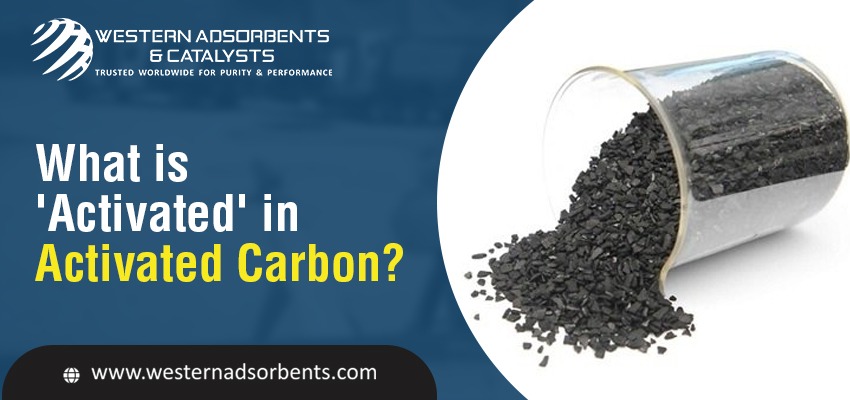
Activated carbon, also known as activated charcoal, is a superior adsorbent material with a unique porosity and large surface area. Its extremely porous structure allows it to hold and capture compounds effectively. When it comes to what ‘activated’ in activated carbon means, it simply refers to the process by which the carbon is treated. There are several activation processes used to increase the surface area and porosity, enhancing its adsorption capacity to trap molecules effectively. This porous structure allows the activated carbon to adsorb impurities and contaminants in applications like water purification, air filtration, and other uses.
Activated Carbon Production Process
Activated carbon primarily consists of 90% carbon concentration. It is made from carbonaceous materials like coconut shell, wood, coal, paddy husk, or other carbon-rich materials. The making process of activated carbon with its unique properties can be done through steam activation or chemical activation. The activation process transforms the raw carbon material into a highly adsorbent material.
Steam Activation Method
The steam activation method is one of the most common production techniques used by the activated carbon manufacturers in the world. This process generally involves coconut shell or coal as a raw material. The steam-activated carbon is produced in a two-stage process.
➤ 1st Stage Carbonization
In the 1st stage, the raw material is pre-sized and carbonized by heating in an inert environment to dehydrate and devolatilize the carbon. This carbonization process reduces the volatile content of the material and develops micro-pores that are neither too small nor too large, but a perfect adsorbent structure.
➤ 2nd Stage Activation
The 2nd stage is the activation phase, where the pores are enlarged, and the internal surface area is increased. The carbonized material is activated at a temperature of 700 °C to 1000 °C. The chemical reaction between carbon and steam occurs on the internal surface, producing a microporous structure. The 1mm to 3mm pieces are crushed and screened to remove dust and contaminants, forming granular, pelletized, or powder activated carbon. At Western Adsorbents & Catalysts, as one of the most trusted coconut shell-based activated carbon manufacturers in India, we use a steam activation process that allows the formation of activated carbon in different sizes, pore structures, and surface areas, meeting specific client requirements.
Chemical Activation Method
In the chemical activation method, carbonaceous feedstock like wood-based materials, including sawdust, wood chips, or agricultural waste, is used and mixed with dehydrating chemicals like phosphoric acid or zinc chloride. After a few steps of the process and steam heating to temperatures of 500 °C to 700 °C, activated carbon with the desired inner structure is obtained.
Conclusion
Activated carbon is a highly versatile material employed across various applications for its excellent adsorbent capabilities. At W.A.C., as one of the world’s largest activated carbon manufacturers, we use a steam activation process, focusing on sustainability and reduced environmental impact. This distinctive feature in our production of activated carbon allows for consistent and uniform heat distribution to produce a homogenous pore distribution to enhance adsorption performance. So when it comes to activated carbon for your applications, opt for the best in the market- Western Adsorbents & Cataylts. Get in touch with us and discover how our carbon solutions can add value to your business.