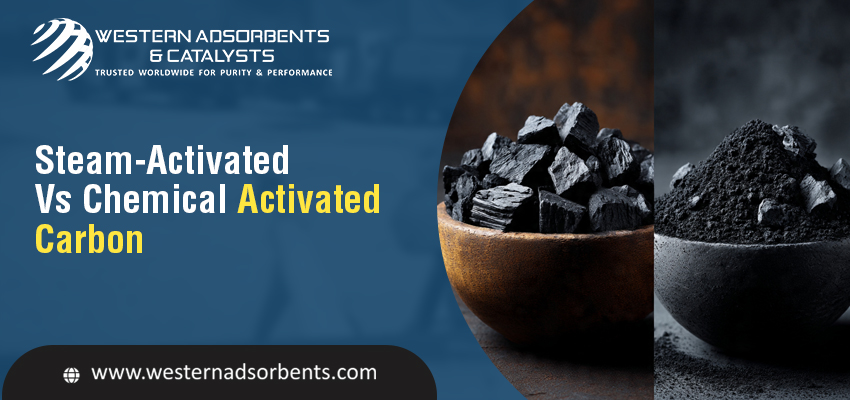
Activated carbon is a versatile material used in purification, filtration and adsorption. It is made from wood, coal or coconut shell processed at high temperature, giving it a unique microporous structure. This large internal surface allows activated carbon to trap and adsorb contaminants from liquids and gases. Activated carbon is produced through two methods, like steam activation and chemical activation. Each of these processes has unique benefits, properties and suitability for specific applications. In this blog, we discuss both these methods to help you choose the right one for your needs.
How is Activated Carbon Made?
Activated carbon is a carbon-rich material with a large surface area and high porosity. It can be made from different raw materials such as coconut shells, wood, nut shells, peat, and coal. High-quality raw materials allow for the production superior superior-quality activated carbon products. At Western Adsorbents & Catalysts, as a leading activated carbon manufacturer in India use top-notch raw material under a stringent quality control process to yield a high-purity activated carbon product.
Why are Different Activation Techniques Used?
The activation used determines the pore structure, surface area and most importantly, the adsorptive capacity. When it comes to specific filtration needs like water or air, choosing the right activation method is crucial. Steam activation creates large pores and a wide range of pores, while, on the other hand chemical activation forms a mesoporous structure. As per the specific applications, the activation method is chosen.
Steam-Activated Vs Chemical Activated Carbon
What is Steam Activation?
Also known as a physical activation, the raw material, like wood or coconut shell, is subject to carbonization at higher temperatures from 600 degrees Celsius to 1200 degrees Celsius. After the material is steamed, it opens the internal structure of carbon and increases the surface area and creating pores.
Applications of Steam Activated Carbon
Air & gas purification is used in industrial air filters and HVAC systems.
Odour control in commercial and residential uses
Metal recovery and mining wastewater treatment and purification
What is Chemical Activation?
In chemical activation, the raw material is impregnated with chemicals, which can be either an acid, a base or a salt. It is then heated at low temperatures ranging from 450 degrees Celsius and 900 degrees Celsius as compared to steam activation.
Applications of Chemical Activated Carbon
Highly effective in removing organic matter in water treatment
Filtering unwanted impurities in food & beverage industry for a clean & high-purity product
In pharmaceutical and medical applications, it is used to remove toxins & chemicals.
Steam-Activated Vs Chemical Activated Carbon: Which is Better for Your Application?
Choosing between steam activated and chemical activated carbon depends on your specific application. If your requirement is for gas-phase filtration, like air purification or gas processing, choose steam activation. For liquid-phase uses like water filtration, opt for chemically activated carbon. W.A.C. is your trusted coconut shell activated carbon manufacturer in India, offering a complete range of activated carbon tailored for your specific needs. Whether you are looking for granular, extruded or powder activated carbon, we’ve got you covered! For the best quotes, call us.
Also Read: Which Carbon is Better: Coal-based or Coconut Shell-based?