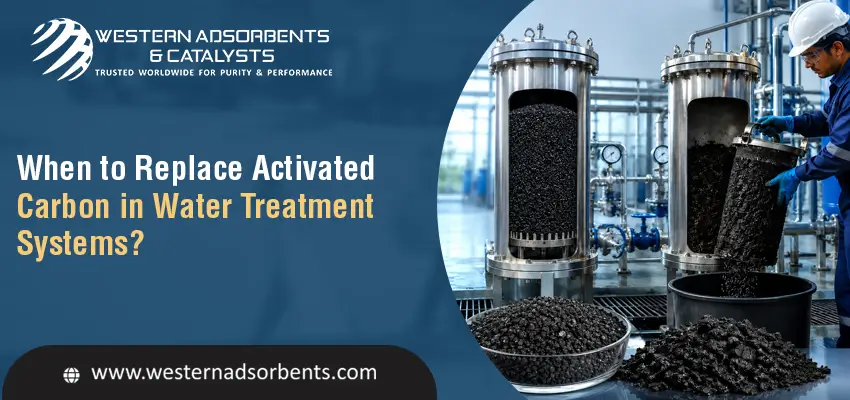
Quick Answer: Activated carbon should be replaced when it reaches adsorption capacity and can no longer effectively remove contaminants. Common signs include chlorine breakthrough, return of taste or odour, rising TOC levels, increased pressure drop, and reduced filtration performance. Regular water quality monitoring is the most reliable way to determine the right replacement time.
Key Takeaways:
✔ Activated carbon gradually loses adsorption capacity over time.
✔ Chlorine breakthrough is one of the earliest replacement indicators.
✔ Water quality monitoring is more reliable than replacing carbon on a fixed schedule.
✔ Carbon lifespan depends on water quality, contaminant load, flow rate, and carbon grade.
✔ High-quality activated carbon offers longer service life and better filtration performance.
Activated carbon is one of the most important components of water treatment systems. It removes chlorine, unpleasant taste, organic compounds, and a range of impurities. But just like any other filter, activated carbon also needs to be replaced. Over a period of time, its pores fill up with contaminants, and it gradually loses its ability to purify water. The difficulty for most plant operators is identifying the right time to replace it, because the carbon does not stop working suddenly. Its performance declines slowly, and water quality may already be affected before the drop becomes obvious.
The timing of replacement matters for two reasons. Replacing the carbon too early wastes media that still had usable capacity, while replacing it too late leads to poor water quality and contaminant breakthrough. Getting it right is therefore both a cost and a quality decision. In this guide, we at Western Adsorbents & Catalysts explain how activated carbon works, the signs that it needs replacing, and how to plan the replacement the right way.
How Does Activated Carbon Work in Water Treatment?
To know when to replace activated carbon in water treatment systems, it is important to understand how it works. Activated carbon purifies water through a process called "adsorption", in which impurities attach to the surface of the carbon rather than being absorbed into it.
Activated carbon is effective because of its very large internal surface area. A single gram can have a surface area of over 1,000 square metres, created by millions of tiny pores. As water passes through the carbon bed, contaminants such as chlorine, organic molecules and taste and odour compounds are attracted to and held on these pore surfaces.
Each impurity that attaches to the carbon occupies one of its adsorption sites. Once all the sites are filled, the carbon is "saturated" or "spent" and can no longer trap new contaminants. At this stage, the trusted bulk activated carbon suppliers in India provide activated carbon for water treatment systems.
What is Activated Carbon Breakthrough?
The key concept every operator should understand is "breakthrough". As long as the carbon has free adsorption sites, treated water leaves the bed clean. But once the carbon nears saturation, contaminants begin to "break through", passing out with the treated water instead of being captured.
Breakthrough is the clearest signal that the carbon has reached the end of its service life, and one needs to contact activated carbon manufacturers in world to source top-quality activated carbon. The goal of good monitoring is to predict and detect breakthrough before it affects your final water quality, not after.
Signs That Your Activated Carbon Needs Replacing
So how do you know when it is time? Watch for these signs that your activated carbon bed is exhausted.
➤ Return of Taste and Odour: One of the earliest and most noticeable signs. If chlorine taste, smell or other odours reappear in the treated water, the carbon is losing its adsorption capacity.
➤ Chlorine Breakthrough: If free chlorine starts appearing in the outlet water when it should be fully removed, the carbon can no longer dechlorinate effectively.
➤ Rising Contaminant Levels: Increasing levels of organic compounds, measured as TOC (Total Organic Carbon) or COD, in the treated water indicate the bed is saturated.
➤ Reduced Flow or High Pressure Drop: Clogging, fouling or compaction of the bed can restrict flow and raise the pressure drop across the vessel, signalling it is time to place orders with the top granular activated carbon manufacturers in Vietnam for top-notch carbon.
➤ Shorter Service Cycles: If the carbon needs backwashing more often, or the time between effective performance keeps shrinking, its capacity is fading.
➤ Reaching Estimated Bed Life: Even without obvious symptoms, carbon has a predictable working life based on your flow rate and contaminant load, and should be assessed as it approaches that point
What Affects How Often Activated Carbon Needs Replacing?
There is no single fixed lifespan for activated carbon, because it depends heavily on your specific conditions. The main factors are:
➤ Contaminant Load: The higher the level of impurities in the incoming water, the faster the carbon saturates.
➤ Flow Rate: Higher flow rates and shorter contact times reduce how efficiently the carbon works.
➤ Water Quality: The type and concentration of contaminants, chlorine, organics, and colour directly affect consumption.
➤ Carbon Quality: A higher-grade carbon with a greater iodine number and surface area lasts longer and performs more consistently.
➤ System Design: Bed depth, vessel size and contact time all influence how long the carbon remains effective.
Conclusion
Knowing when to replace activated carbon in a water treatment system comes down to watching for the signs, the return of taste and odour, chlorine breakthrough, rising contaminant levels and higher pressure drop, and backing that up with regular monitoring rather than guesswork. The right timing protects your water quality while avoiding wasted media and unnecessary cost.
At Western Adsorbents & Catalysts, we help water treatment operators get the most from their systems with premium-grade activated carbon designed for consistent, long-lasting performance. As a trusted activated carbon manufacturer in India, we supply coal, coconut shell and wood-based activated carbon in granular, powdered and pelletised forms, with high iodine numbers and dependable quality for water treatment, air purification and industrial applications. Whether you need fresh carbon for replacement or guidance on selecting the right grade, our team is here to help you keep your water clean and your operation efficient.
FAQs
How Often Should Activated Carbon Be Replaced in a Water Treatment System?
➤ There is no fixed interval, as it depends on your contaminant load, flow rate, water quality and carbon grade. It can range from a few months to a few years. The best approach is to monitor performance and replace the carbon when signs of exhaustion appear.
What Are the Signs That Activated Carbon is Exhausted?
➤ The main signs are the return of taste and odour in treated water, chlorine breakthrough, rising organic contaminant levels (TOC or COD), reduced flow or increased pressure drop, and shorter service cycles between backwashing.
What is a Carbon Breakthrough?
➤ Breakthrough is the point at which the carbon becomes saturated and can no longer trap contaminants, so impurities begin passing through into the treated water. It is the clearest sign that the carbon needs replacing or reactivating.
Can Spent Activated Carbon Be Reactivated Instead of Replaced?
➤ Yes. Spent carbon can be thermally reactivated to burn off adsorbed contaminants and restore much of its capacity. This is often economical for large industrial users, while fresh carbon is usually preferred for critical uses like drinking water.
Does Higher-quality Activated Carbon Last Longer?
➤ Generally, yes. Carbon with a higher iodine number, greater surface area, good hardness and uniform particle size tends to last longer, perform more consistently and make replacement schedules easier to predict.