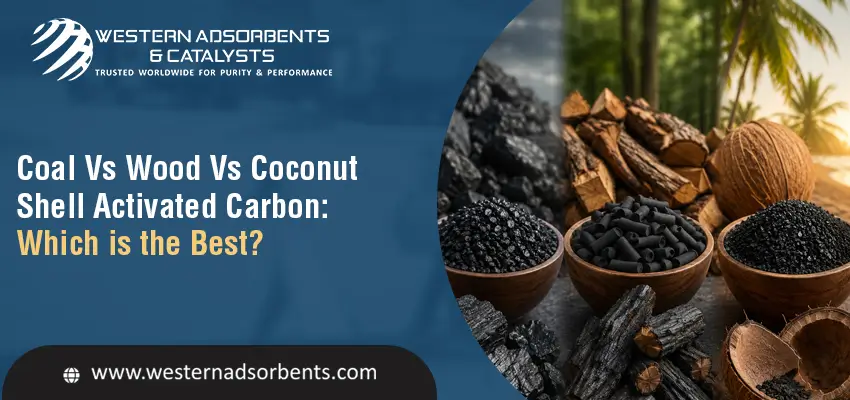
Activated carbon is a highly versatile and effective material widely used across industries for drinking water purification, gold recovery, air purification and other industrial applications. The source material of the activated carbon determines its characteristics and properties. It is typically made from coal, wood and coconut shell, each exhibiting different characteristics. In this blog, we explore the main differences between coal, wood and coconut shell activated carbon-based activated to help you make an informed decision.
Difference Between Coal, Wood and Coconut Shell Activated Carbon
1. Coal-based Activated Carbon
The coal-based activated carbon is produced from coal with a steam activation process. This process creates millions of pores on the carbon surface, thereby increasing the surface area. Bituminous coal is the ideal choice for its higher microporosity and 70 to 90% carbon content. As the top coal activated carbon manufacturer in India, we at Western Adsorbents & Catalyst recommend the coal-based activated carbon for demanding uses like wastewater and effluent treatment. It is also ideal for gas purification and odour removal applications.
2. Wood-based Activated Carbon
The wood activated carbon has gained popularity for its excellent decolouring, non-toxicity, large surface area and exceptional adsorption capabilities. Made from sawdust, pine wood and other wood sources, it is ideal for removing taste, colour and odour from water. Food and beverage manufacturers often rely on wood-based activated carbon suppliers in India for sugar refining, edible oil purification, and beverage clarification. Pharmaceutical companies also use it in various purification processes where large molecules need to be removed.
3. Coconut Shell Based Activated Carbon
Coconut shell activated carbon is widely regarded as one of the highest-performing activated carbon products available today. It is manufactured from coconut shells, a renewable agricultural by-product that would otherwise be discarded as waste. What makes coconut shell activated carbon unique is its highly developed microporous structure. These micropores provide exceptional adsorption capacity for small molecular contaminants such as chlorine, volatile organic compounds (VOCs), taste and odour compounds, and dissolved organic matter.
Coal Vs Wood Vs Coconut Shell Activated Carbon: Side-by-side Comparison
| Property | Coal-based | Wood-based | Coconut Shell |
| Raw material | Fossil | Renewable wood | Renewable coconut shell |
| Microporosity | Medium | Medium | High |
| Mesoporosity | High | Medium | Medium |
| Mesoporosity | Medium | High | Low |
| Hardness | High | Medium | Very high |
| Ash content | Moderate | Low | Very low |
| Dust formation | Moderate | Low | Very low |
| Water treatment | Excellent | Good | Excellent |
| Air purification | Good | Moderate | Excellent |
| Gold recovery | Limited | Limited | Excellent |
Which Activated Carbon is Best?
When it comes to coal vs wood vs coconut shell activated carbon, there is no single activated carbon that is universally superior for every application. Coal-based activated carbon offers versatility, affordability, and strong performance across a broad range of industrial processes. Wood-based activated carbon excels in decolourization and adsorption of larger organic molecules. Coconut shell activated carbon provides exceptional adsorption capacity, high purity, superior hardness, and outstanding sustainability.
So when choosing Coal vs wood vs coconut shell activated carbon, the best option depends entirely on your filtration objectives, contaminant characteristics, operating conditions, and sustainability goals.
Conclusion
Selecting the right activated carbon can significantly impact filtration efficiency, operating costs, and overall process performance. Whether you're evaluating coal-based, wood-based, or coconut shell activated carbon, the experts at Western Adsorbents & Catalysts, the leading manufacturer of activated charcoal in India, can help you identify the most effective solution for your application.
Contact our technical team today for personalized recommendations and product guidance tailored to your industry requirements.
Frequently Asked Questions (FAQ)
1. What is the difference between coal, wood, and coconut shell activated carbon?
The main difference lies in their raw materials, pore structure, hardness, adsorption capacity, and ideal applications. Coal-based carbon is versatile, wood-based carbon is excellent for decolourization, and coconut shell carbon offers superior microporosity and purity.
2. Which activated carbon is best for water treatment?
Both coal-based and coconut shell activated carbon perform exceptionally well in water treatment. Coconut shell carbon is often preferred for drinking water applications due to its high adsorption efficiency and low ash content.
3. Why is coconut shell activated carbon considered superior?
Coconut shell activated carbon has a highly developed microporous structure, high hardness, low dust formation, low ash content, and excellent adsorption capacity for small contaminants such as chlorine, VOCs, and odour compounds.
4. What are the advantages of coal-based activated carbon?
Coal-based activated carbon offers excellent versatility, strong adsorption performance, high hardness, and cost-effectiveness, making it suitable for wastewater treatment, gas purification, and industrial filtration.
5. When should wood-based activated carbon be used?
Wood-based activated carbon is ideal for removing colour, taste, and odour from liquids and is widely used in sugar refining, edible oil purification, beverage processing, and pharmaceutical applications.
6. Which activated carbon is best for gold recovery?
Coconut shell activated carbon is considered the preferred choice for gold recovery due to its superior hardness, low attrition rate, and highly developed microporous structure.
7. How do I choose the right activated carbon?
The best activated carbon depends on your filtration goals, contaminant type, operating conditions, adsorption requirements, and sustainability preferences.