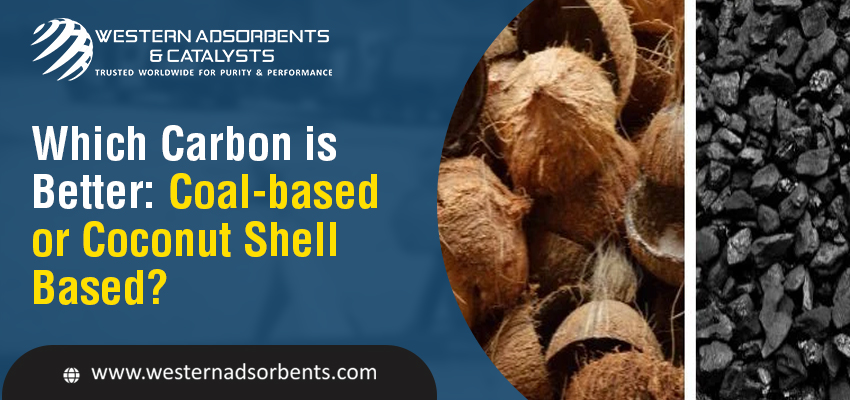
Activated carbon is a type of carbon that is treated to possess a high surface area and deep pores. With its network of pores and large surface area, it is widely used as a purification material in the pharmaceutical industry, food and beverages, water treatment, and many other applications. Its wide applications showcase its credibility, utility, and efficiency. However, to achieve the best quality of carbon, two of its sources are being analysed: Coal-based and coconut-based carbon. Each of them contains unique characteristics that impact carbon performance in different applications. In this blog, let's answer the question: Which Carbon is Better: Coal-based or Coconut Shell-based?
Coal-Based Carbon Vs. Coconut Shell-Based Carbon
There are many differences between the two types of coal; however, their efficiency and performance highly depend on how purified they are. Western Adsorbents & Catalysts offer a full range of highly-purified coal-based carbon, as well as coconut shell-based carbon. Being the coconut shell activated carbon manufacturer, we process and refine the raw materials to ensure top-quality and customer satisfaction. Check our other carbon products, such as activated charcoal, anthracite coal, activated carbon, etc. Give us a call to discuss ahead.
| Aspect | Coal-Based Carbon | Coconut Shell-Based Carbon |
| Raw Material Source | Derived from fossilised ancient plant matter (coal deposits) | Produced by carbonising coconut shells (biomass) |
| Origin | Non-renewable (fossil fuel) | Renewable (agricultural waste) |
| Carbon Content | High (70–90%) depending on coal grade | Moderate to high (60–80%) depending on carbonisation conditions |
| Ash Content | Higher ash and mineral impurities | Low ash and cleaner composition |
| Structure | Dense and less porous | Hard, light, and naturally more porous |
| Moisture Content | Low after processing | Slightly higher unless properly dried |
| Hardness | Brittle; varies with coal type | Very hard and strong carbon matrix |
| Burning Characteristics | Burns longer but produces more smoke and sulphur compounds | Burns cleaner with less smoke and odour |
| Environmental Impact | Non-renewable, higher CO₂ emissions | Eco-friendly, made from renewable shells |
| Common Uses | Fuel, carbon black, metallurgy, and electrode manufacturing | Domestic fuel, charcoal briquettes, eco products, filters |
Benefits of Coconut Shell-Based Carbon
➤ Its large surface area and intense network of pores determine the efficiency of the carbon. The coconut shell-based activated carbon manufacturers in USA produce this form of activated carbon in large quantities and export it overseas as well.
➤ It is ideal for the adsorption of small molecules.
➤ Coconut shell activated carbon is highly effective in purifying air.
➤ They are eco-friendly and renewable, as they are by-products of the agriculture industry.
➤ It has a smaller density and is lightweight.
Benefits of Coal-Based Carbon
➤ It is highly effective in large-scale purification due to its broad structure.
➤ It is highly durable for heavy tasks.
➤ It offers immense cost-effectiveness.
➤ It can be widely used in water treatment, gas purification and many other chemical treatment plants.
Which is Better? Coal-Based Carbon or Coconut Shell-Based Carbon: Conclusion
After analysing the difference between coal-based activated carbon and coconutshell activated carbon, it is suggested that coconut shell activated carbon is less expensive than coal-based, making it ideal for removing VOCs and impurities in water and air. They have higher hardness, process less dust and ash, and are more eco-friendly. The choice should be determined by the requirements of your applications, considering adsorption efficiency, cost, and environmental impact. Western Carbon & Adsorbents is one of the leading activated carbon manufacturers in the world, offering different types of activated carbon and grades from diverse raw materials. Talk to us about your applications, and we will help you choose the right activated carbon. Give a call!
Also Check: What is Coconut Shell Activated Carbon?