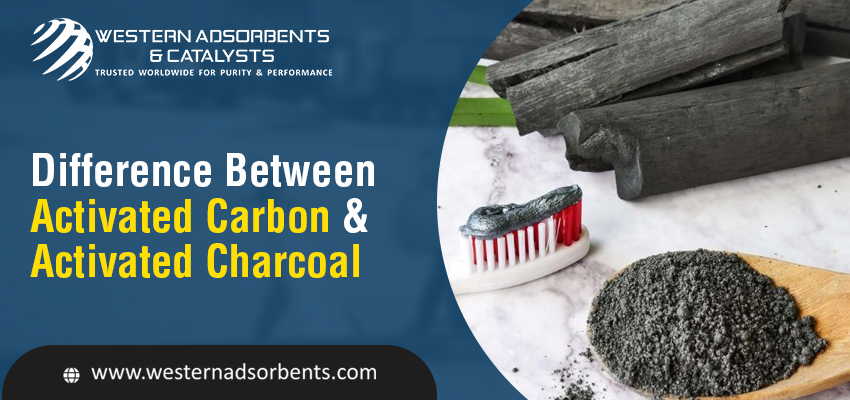
Activated carbon, popularly known as activated charcoal, is a highly processed type of carbon, especially modified to expand its surface area and produce microscopic cavities all over its surface. These pores help in removing pollutants from air and water; therefore, they are often used in the purification of solutions and gases. These terms are usually used interchangeably, but there are minor differences between activated carbon and activated charcoal. While both materials are rich in carbon, their characteristics and construction are different. In this blog, we discuss the major differences between activated carbon and activated charcoal to help you make an informed decision.
What's the Difference Between Activated Carbon and Activated Charcoal?
To understand what's the difference between activated charcoal and activated carbon, one needs to know activated carbon and charcoal.
What is Activated Carbon?
Activated carbon is a material with a unique pattern, microporous structure and larger surface area. It performs excellently as an adsorbent because its microporous structure allows it to trap and hold molecules on its surface. Activated carbon is a popular component of water and air purification, gold recovery, food and beverages, and pharmaceuticals. Western Adsorbents & Catalysts is one of the largest activated carbon manufacturers, with an attractive range of product lines. We offer activated carbon, activated charcoal, garnet, coconut shell-based carbon, anthracite coal, and many more. Call us for more information.
What is Charcoal?
Charcoal is a type of carbon produced as the outcome of burning wood or other organic material in the absence of oxygen. The charcoal is produced by the process of pyrolysis. Here, the organic material is heated under intense temperatures in the absence of oxygen. This process removes water and volatile materials, leaving high-purity carbon. The result is a thin and porous material used in different industries. For example, it is used to treat poisoning and higher cholesterol levels.
What is Activated Charcoal?
Charcoal is processed under stringent techniques to increase its surface area, porosity and adsorb specific chemicals and molecules. To produce activated charcoal, the normal charcoal is heated under high temperature in the presence of a chemical or gas that forms a network of holes and channels on its surface. Methods like steam activation, chemical activation, and physical activation are employed and are known as activation.
Activated Carbon vs Charcoal
Let's take a look at science-backed differences between activated charcoal and activated carbon.
The primary difference between activated carbon and charcoal is the carbon source. Charcoal is produced from wood, whereas activated carbon is made using materials like coconut shells, wood, coal, coir, petroleum pitch, or nutshells. Both materials are hard and porous, allowing contaminants to be captured. Activated carbon is a preferred choice as it is carbon-rich and high-purity. Western Adsorbents & Catalysts is a coconut shell activated carbon manufacturer in India. We offer customised solutions in terms of sieve size, hardness, CTC absorption, and iodine value per specific application. Contact us for more information.
Conclusion
It is crucial to understand the differences between activated charcoal and activated carbon for a better understanding of their functions, specifications, and to decide which will suit your needs. While both these carbon solutions are highly carbonaceous materials, they are produced using different carbon sources and activation methods. Hence, selecting the right product can significantly impact the effectiveness of your filtration applications. Western Adsorbents & Catalysts, as the top activated carbon suppliers in India, are here to help you make an accurate choice. We offer a comprehensive range of activated carbon in different forms, such as pellets, granular, and powdered. We also offer high-quality products like alumina balls, ceramic balls, garnet, molecular sieves, and manganese dioxide. Call us to discuss your requirements further.