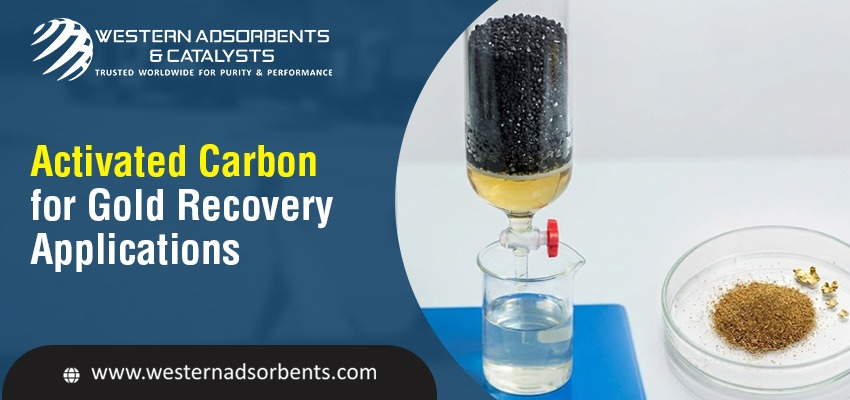
How Coconut Shell Activated Carbon Improves Gold Extraction Efficiency
Gold recovery is the process of extracting and refining gold in its raw form. Industries must focus on striking the right balance between operating cost and maximizing return on investment, whilst being environmentally responsible. Activated carbon is vital to gold extraction operations, to be used as an adsorbent in mining operations. Its high surface area and superior hardness make activated carbon an important component in gold processing operations, including carbon-in-leach (CIL), carbon-in-column (CIC) and carbon-in-pulp operating systems.
Before we go deep into activated carbon, here are a few things that often surprise people about the gold recovery industry:
➤ Over 70% of all gold mined today is extracted using a cyanide + activated carbon process (CIP or CIL). It is the global standard - not the exception.
➤ A single tonne of gold ore typically contains just 1 to 5 grams of gold. Activated carbon is what makes recovering those few grams economically viable at scale.
➤ The world produces around 3,500 tonnes of gold per year. The activated carbon market supporting this extraction is worth over USD 500 million annually. (Source: World Gold Council, 2023)
➤ Coconut shell activated carbon is not just a material - it is one of the highest-purity forms of carbon available industrially, with surface areas exceeding 1,000 m² per gram. That is roughly the size of a football field packed into a teaspoon.
➤ Gold can be recovered from ore with 98–99% efficiency when the right grade of activated carbon is matched to the right circuit design.
Role of Activated Carbon in Gold Recovery Process
Choosing the right activated carbon for the gold recovery process is pivotal to maximize profits & improving yield. As the leading activated carbon manufacturer in world, Western Adsorbents & Catalysts, we provide a comprehensive range of activated carbon for the gold mining industry. Our coconut shell activated carbon is one of he most popular grades for gold recovery applications produced by selected high-quality Indian coconuts by steam activation. It offers optimal adsorption kinetics for gold recovery in various processes.
In the gold recovery process, water and cyanide, like sodium cyanide, potassium cyanide or calcium cyanide, are incorporated to form a slurry. The gold leaches out and blends with cyanide to form a solution. In this process, activated carbon is used to separate and hold the gold, which is further removed after processing. Here, coconut shell activated carbon manufacturers in India recommend Gold recovery Coconut shell activated carbon for its high adsorption efficiency, better recovery rates and longer service life.
Think of activated carbon as a microscopic sponge - one with millions of tiny pores inside it. When gold is dissolved into a liquid (using a cyanide solution), activated carbon is added to that liquid. The dissolved gold sticks to the inside walls of those pores, like a magnet attracting metal shavings.
Once the carbon is 'loaded' with gold, it is separated from the liquid, and the gold is then stripped off the carbon using heat and chemicals - leaving the gold behind as a concentrated solution, which is then converted into a solid gold bar. The carbon itself is not wasted. After the gold is stripped, the carbon is cleaned and reused multiple times - making the process both cost-efficient and relatively resource-conscious compared to older extraction methods.
This entire process - dissolving gold with cyanide and capturing it on activated carbon - is called carbon adsorption gold recovery. It replaced older methods like mercury amalgamation, which were far more toxic and less efficient.
Gold Recovery Process & Use of Activated Carbon
➤ Carbon in Pulp (CIP): The pulp is leached in the agitation tank before introducing activated carbon.
➤ Carbon in Leach (CIL): Activated carbon is added to the slurry as the gold is leached and absorbed at the same time.
➤ Carbon in Column (CIC): Here, ore is leached, and a clarified solution is fluidized in a column with activated carbon.
Why Choose Western Adsorbents & Catalysts for Gold Recovery?
WAC offers a comprehensive range of activated carbon for CIL, CIC, and CIP circuits. Using the high-quality activated carbon ensures maximize gold yield and extremely low soluble gold loss. Our products are tested in our in-house lab, which ensures the product meets quality parameters in terms of abrasion hardness, impact hardness and rapid adsorption kinetics. As one of the largest activated carbon manufacturers in India, we are here to provide tailored high-quality activated carbons to meet your specific gold recovery applications. Contact us and discover how we can add value to your business.
Frequently Asked Questions
➤ What is activated carbon used for in gold mining?
- Activated carbon is used to adsorb (capture) dissolved gold from the cyanide solution that forms during the gold leaching process. Without activated carbon, the dissolved gold would stay in the liquid and be lost to the tailings pond. The carbon acts like a magnet for gold - holding it until it can be stripped, concentrated, and smelted into a gold bar.
➤ Why is coconut shell activated carbon better for gold recovery?
- Coconut shell activated carbon has a microporous structure that is a near-perfect match for the gold-cyanide complex formed in leaching. It is also harder than coal or wood-based alternatives, meaning it breaks down less during the constant agitation in CIP and CIL tanks, so less gold is lost through carbon fines reaching the tailings.
➤ What is the CIP process in gold mining?
- Carbon-in-Pulp (CIP) is a gold recovery process where the ore is first leached with a cyanide solution to dissolve the gold, and then activated carbon is added in separate tanks to adsorb the dissolved gold. The loaded carbon is then moved to an elution circuit where the gold is stripped off, concentrated, and recovered as a dore bar.
➤ How long does activated carbon last in a gold circuit?
- High-quality coconut shell activated carbon can be reactivated and reused 8 to 12 times before it degrades enough to need replacing. Each cycle includes an acid wash (to remove mineral scale) and thermal reactivation in a kiln (to restore adsorption capacity). The number of cycles depends on ore conditions, circuit design, and the hardness of the carbon itself.
➤ What happens to activated carbon after gold is removed?
- After gold is stripped from the activated carbon via elution, the spent carbon is regenerated - first acid-washed to remove inorganic deposits, then heated in a rotary kiln at 700–750°C to restore its adsorption pores. The regenerated carbon goes back into the gold circuit. This closed-loop approach makes activated carbon one of the most cost-effective reagents in modern gold processing.
➤ Is activated carbon for gold mining available in India?
- Yes. Western Adsorbents & Catalysts is one of India's leading activated carbon manufacturers for gold recovery applications. We supply coconut shell activated carbon in standard mesh sizes (6×12, 6×16, 8×16) for CIP, CIL, and CIC circuits, with full lab certification. Contact us for a free technical datasheet and quote.
➤ What is elution in the gold recovery process?
- Elution (also called stripping) is the step where gold is removed from the loaded activated carbon. A hot caustic cyanide solution is passed through the carbon, reversing the adsorption and pushing the gold back into liquid form. This gold-rich eluate then goes through electrowinning, where an electric current deposits the gold onto steel cathodes.
➤ How much gold can activated carbon hold?
- In a well-run gold circuit, premium coconut shell activated carbon can hold 3,000 to 6,000 grams of gold per tonne of carbon (g Au/t C) at peak loading, depending on the gold head grade and circuit conditions. The equilibrium loading capacity is defined by the carbon's K-value - a parameter that should be requested from any supplier before purchasing carbon for a gold operation.
➤ What causes gold loss to tailings in a CIP circuit?
- The three main causes of gold loss to tailings in a CIP circuit are:
(1) carbon attrition - carbon particles that break into fines small enough to pass through inter-stage screens, carrying adsorbed gold with them,
(2) preg-robbing - naturally carbonaceous material in some ores that competes with the activated carbon for gold in solution,
(3) poor circuit design - insufficient carbon concentration, too few adsorption stages, or inter-stage screen problems. Using high-hardness activated carbon directly addresses the first and most common cause.
➤ Can I get a sample of activated carbon for gold recovery testing?
- Yes. Western Adsorbents & Catalysts provides laboratory-certified samples of our gold recovery activated carbon for evaluation. Each sample comes with a full technical datasheet including iodine value, ball-pan hardness, bulk density, moisture content, and mesh size distribution. Reach out through our contact page to request a sample for your metallurgical test programme.