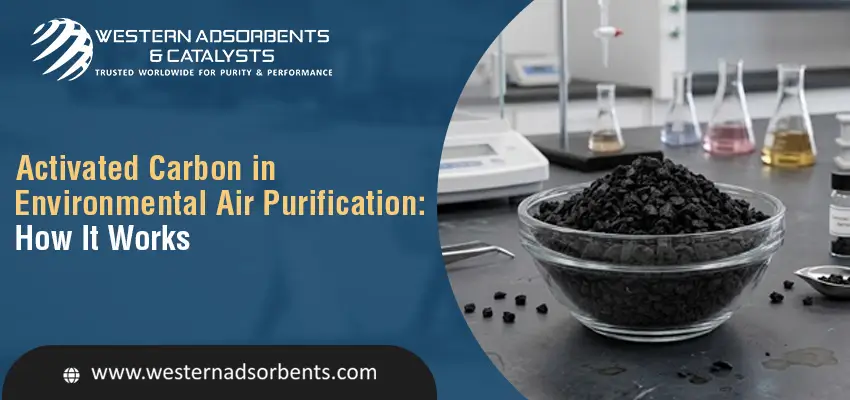
Air pollution has become one of the most pressing environmental challenges across industrial and urban environments. Industrial emissions, volatile organic compounds (VOCs), odours, and hazardous gases can significantly affect air quality and public health. As industries and environmental regulators focus on cleaner air solutions, activated carbon has emerged as one of the most effective materials for air purification. Activated carbon is widely used in environmental air treatment systems due to its exceptional adsorption capacity. It helps capture harmful gases, chemical vapours, and pollutants before they are released into the atmosphere.
How Activated Carbon Works in Air Purification
The effectiveness of activated carbon in air purification comes from its adsorption mechanism. When contaminated air passes through a bed or filter containing activated carbon, pollutants attach to the carbon’s surface and remain trapped within its pores. This process enables activated carbon to capture:
➤ Volatile organic compounds (VOCs)
➤ Chemical vapors
➤ Odorous gases
➤ Toxic industrial pollutants
Industries typically source high-quality materials from reliable bulk activated carbon suppliers in India to ensure effective pollutant removal.
Role of Activated Carbon in Environmental Air Purification
Activated carbon plays a critical role in industrial air pollution control and environmental protection. It is widely used in systems designed to remove harmful gases and maintain clean air standards.
➤ Removal of Volatile Organic Compounds (VOCs): VOCs are common industrial pollutants released from manufacturing, chemical processing, paints, solvents, and petroleum products. Activated carbon effectively captures these compounds before they enter the atmosphere.
➤ Odour Control Systems: Activated carbon is highly effective in removing unpleasant odours generated by industrial processes, waste treatment plants, and food processing facilities.
➤ Industrial Emission Control: Many industries rely on activated carbon suppliers in India for activated carbon to control emissions and meet environmental compliance standards. These systems help remove hazardous gases from exhaust air streams.
➤ Indoor Air Purification: Activated carbon is also used in indoor air purification systems, where it helps remove smoke, chemical vapours, and household pollutants.
Types of Activated Carbon Used in Air Purification
Different forms of activated carbon are used depending on the application and air purification system design.
➤ Granular Activated Carbon (GAC): Granular activated carbon consists of irregular particles and is commonly used in industrial air filtration systems and gas treatment units.
➤ Powdered Activated Carbon (PAC): Powdered activated carbon is used for rapid adsorption processes where fine particles are required for fast pollutant removal.
➤ Pelletized Activated Carbon: Pelletized carbon is produced in cylindrical shapes and is commonly used in air filtration systems and industrial gas purification processes due to its low pressure drop and high mechanical strength.
Many industries prefer working with the largest activated carbon manufacturers in India to ensure consistent product quality and performance.
Coconut Shell Activated Carbon for Air Purification
Among the various raw materials used to produce activated carbon, coconut shells are considered one of the most efficient sources. Coconut shell carbon has a highly microporous structure that makes it particularly effective for gas-phase adsorption.
Advantages of Coconut Shell Activated Carbon
Coconut shell activated carbon offers several advantages in air purification applications:
➤ High adsorption capacity
➤ Strong mechanical strength
➤ Low ash content
➤ Environmentally sustainable raw material
Because of these benefits, many companies prefer sourcing products from coconut shell activated carbon suppliers for industrial air treatment systems.
Industrial Applications of Activated Carbon in Air Treatment
Activated carbon is widely used across multiple industries where air purification is essential for environmental compliance and operational safety.
➤ Chemical and Petrochemical Plants: Activated carbon helps remove VOCs and hazardous gases generated during chemical processing.
➤ Pharmaceutical Manufacturing: Air purification systems use activated carbon to control chemical vapours and maintain safe production environments.
➤ Waste Treatment Facilities: Activated carbon systems are used for odour control and removal of harmful gases.
➤ Food Processing Plants: Activated carbon filters help eliminate odours and airborne contaminants.
Conclusion
Activated carbon has become an essential material in modern environmental air purification systems. Its unique porous structure allows it to effectively remove VOCs, chemical vapours, odours, and harmful pollutants from air streams. Choosing the right supplier helps industries maintain reliable purification systems and meet environmental compliance standards.
Partner with Western Adsorbents & Catalysts for High-Quality Activated Carbon
Western Adsorbents & Catalysts is a trusted manufacturer of activated charcoal and a reliable partner for industries seeking advanced adsorption solutions. With expertise in producing high-quality carbon materials, Western Adsorbents works closely with industries that require dependable purification solutions. As one of the recognized coconut shell activated carbon manufacturers in India, the company provides products with excellent adsorption capacity and durability. To learn more about our activated carbon products, call us.
FAQs
What is activated carbon used for in air purification?
Activated carbon removes pollutants, odors, and volatile organic compounds (VOCs) from air through adsorption, making it widely used in environmental air purification systems.
Why is activated carbon effective for air treatment?
Its highly porous structure provides a large surface area that captures harmful gases and chemical vapours from contaminated air.
Why is coconut shell activated carbon commonly used?
Products from coconut shell activated carbon manufacturers in India offer high adsorption capacity, low ash content, and strong durability for air purification applications.
How often should activated carbon be replaced?
Replacement depends on pollutant levels and system usage. Once the carbon becomes saturated, it should be replaced to maintain purification efficiency.
How do industries choose reliable activated carbon suppliers?
Industries should work with trusted activated carbon suppliers that provide consistent quality and reliable supply for industrial air purification systems.