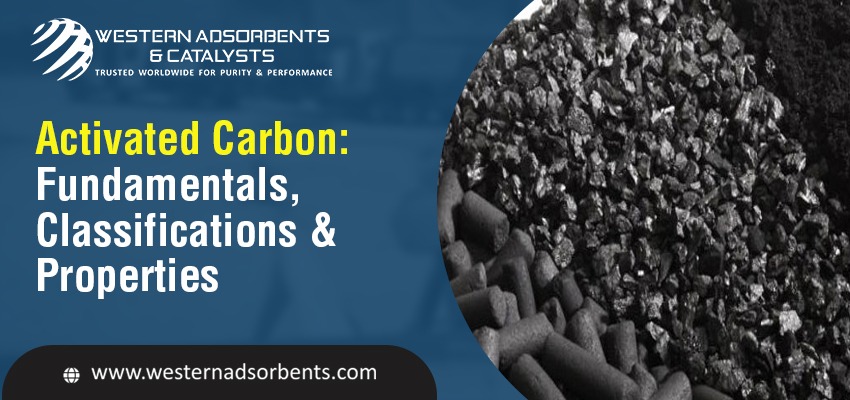
Activated carbon is one of the most versatile and effective adsorbent materials. It is renowned for its large surface area, porosity and high degree of surface reactivity. The basic raw materials of activated carbon are coconut shells, coal, and wood, with a specific activation process contributing to the overall performance characteristics. Activated carbon is one of the finest methods to remove pollutants and contaminants from aqueous solutions and the environment. From water purification, industrial gas purification, precious metal recovery, cosmetics and pharmaceutical applications.
Fundamentals of Activated Carbon
Also known as activated charcoal, it has a high volume of pores of varying sizes and a significant surface area ranging from 500 to 1400m2/g. Most of the types of activated carbon are produced by activated carbon manufacturers in the world through a two-stage process, viz, carbonization and activation. In the 1st stage of carbonization, it enriches the carbon and creates a porous structure. The 2nd stage of activation helps to enhance the porosity.
Classifications of Activated Carbon
The general activated carbon classification is done based on physical characteristics & application suitability, including:
Powdered Activated Carbon (PAC): It is used in water treatment to remove dissolved organic impurities.
Granular Activated Carbon (GAC): It is used for deodorization & separation of components in streams.
Extruded Activated Carbon (EAC): Primarily used in gas phase applications.
Impregnated Activated Carbon: It is used for specific applications in air pollution control.
Properties of Activated Carbon
Activated carbon uses the van der Waals force to adsorb materials. The following are the characteristics of activated carbon:
- Iodine Number: The iodine number is associated with the activity of the product and is often used as a quality parameter in production. The carbon surface oxygen complex ash content and pH levels have an impact on iodine adsorption capacity in aqueous solutions.
- Molasses Number: Adsorption of molasses from a solution is measured as molasses efficiency or number. A high adsorption of large molecules is referred to as a high molasses number. The decolourization capacity of activated carbon is measured using the molasses number.
- Bulk Density: The carbon weight is measured as the Bulk density, which can be anywhere between 2.0 and 2.1g cm−3. A higher volume activity indicates a greater apparent density and a high-quality activated carbon.
- Hardness: The excellent mechanical strength of activated carbon is one of its distinctive features. The hardness or abrasion number refers to the material’s resistance to wear and tear. Activated carbon’s ability to preserve its structural integrity and withstand frictional forces.
Choosing the Right Activated Carbon
Pollutant/Contaminant Profile: What specific contaminants need to be removed?
Adsorption Activity: How quickly should the contaminant be removed?
Particle Size: What are the specific application requirements and pressure drop?
Certification & Standards: What are the regulatory standards for your specific application?
From granular, extruded, to powder and coconut shell activated carbon, each of the types offers varying advantages for specific applications. At Western Adsorbents & Catalysts, with over 55 years of innovation in activated carbon, we help clients select the right product for specific applications. As a leading coconut shell activated carbon manufacturer in India, we help align the right carbon type with your requirements to help you achieve optimal performance and cost-effectiveness for your application. Call us for the best quotes.